
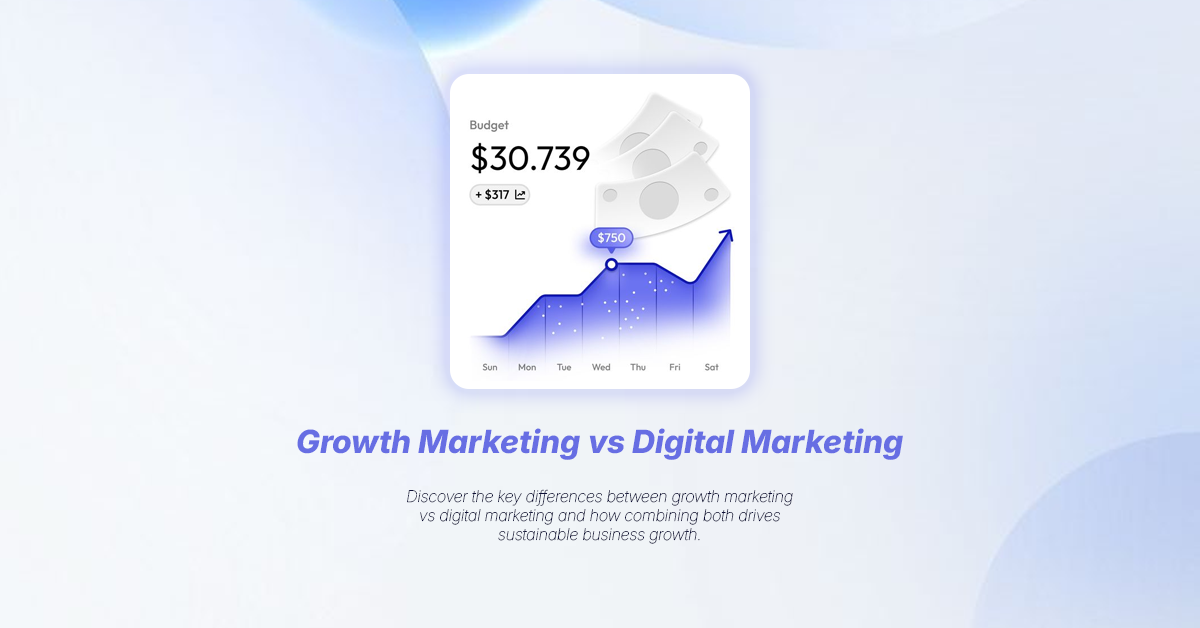
Businesses are constantly asking: “How can we grow faster, reach the right audience, and maximize revenue?” That’s where the terms growth marketing and digital marketing come into play. While they sound similar, they are actually very different approaches with unique mindsets, goals, and methods.
Understanding the distinction between growth marketing vs digital marketing is more than just theory. It’s about knowing where to invest your time, money, and resources so your marketing actually drives sustainable results. In this article, we’ll explore both concepts in depth, compare them, and show how they work together to help your business thrive.
Table of Contents
What is Digital Marketing?
Digital marketing is what most people first think of when it comes to online promotion. It’s all about using online channels to reach potential customers, whether that’s through social media, search engines, email, or paid ads.
Think of digital marketing like casting a wide net. The goal is to attract attention, drive traffic, and encourage immediate actions like signing up for a newsletter or making a purchase.
For example:
- A small eCommerce store might run a Facebook ad campaign for a new product.
- A local café could post Instagram stories highlighting daily specials.
- A SaaS company may create SEO-optimized blog posts to rank on Google for key terms.
Digital marketing campaigns are usually short-term and channel-focused. Success is measured by metrics like clicks, impressions, engagement rates, and conversions. While digital marketing is essential for awareness and lead generation, it often focuses more on getting customers in the door rather than nurturing them long-term.
What is Growth Marketing?
Growth marketing takes a broader, more strategic approach. Instead of just attracting customers, it looks at the entire customer journey from the first interaction to becoming a loyal advocate.

Growth marketing is data-driven and experimental. It combines digital marketing tactics with product improvements, user experience optimization, and behavioral analytics to create sustainable, repeatable growth.
For example:
- Netflix doesn’t just run ads to get new subscribers. They carefully study how users engage with the platform, recommend shows, and improve onboarding to keep people coming back month after month.
- A small online store may notice that many customers abandon their carts. Growth marketing strategies could include personalized email reminders, loyalty programs, or simplified checkout flows to increase retention and revenue.
Growth marketers focus on the entire AARRR funnel:
- Acquisition – attracting the right users
- Activation – ensuring users understand the value quickly
- Retention – keeping users engaged
- Revenue – optimizing the value of each customer
- Referral – turning happy customers into advocates
The main idea? Growth marketing doesn’t just ask, “How do we get more clicks?” It asks, “How do we create real, measurable growth for the business?”
Growth Marketing vs Digital Marketing: Key Differences
Here’s a practical breakdown of how these approaches differ:
| Aspect | Digital Marketing | Growth Marketing |
|---|---|---|
| Objective | Drive traffic, generate leads, increase visibility | Achieve sustainable, measurable business growth |
| Focus | Single campaigns or channels | Entire customer lifecycle |
| Metrics | Clicks, impressions, conversions | Retention, revenue, lifetime value, referrals |
| Mindset | Campaign-oriented | Experimentation and iteration-oriented |
| Scope | Short-term | Long-term and holistic |
| Tools | SEO, social media, paid ads, email marketing | All digital tools + UX improvements + analytics |
In simple terms: digital marketing is part of growth marketing, but growth marketing goes deeper. One focuses on attracting attention, the other focuses on turning that attention into sustainable business growth.
Real-Life Example: Small Business vs Big Brand
Imagine a small online clothing store. Using digital marketing, they might post on Instagram and run a few Facebook ads. This could bring immediate traffic and sales, but many first-time visitors may never return.
Now, if they apply growth marketing principles:
- They analyze which products are most popular and why.
- Improve their website to make checkout faster.
- Send personalized emails to returning customers with product recommendations.
- Encourage referrals with discounts for friends.
The result? Not only do they attract new customers, but they retain them, increase their lifetime value, and turn them into brand advocates.
Big brands like Netflix, Airbnb, and Dropbox use growth marketing consistently to experiment, measure, and optimize every stage of their customer journey. They don’t just rely on ads—they optimize the product and experience to drive growth.
Why Businesses Need Both
Focusing only on digital marketing can get you leads and traffic but without retention and optimization, growth may be limited. Conversely, growth marketing without effective digital campaigns may struggle to attract new users.
The best approach combines both:
- Use digital marketing to attract and engage potential customers.
- Apply growth marketing principles to ensure those customers stick, spend more, and refer others.
This way, every marketing dollar contributes to long-term, scalable growth, not just temporary spikes in traffic.
How to Get Started
Here are a few practical steps to integrate both approaches:
- Audit Your Channels: Identify which digital channels bring the most qualified traffic.
- Track the Customer Journey: Map out how users move from awareness to purchase and beyond.
- Experiment Continuously: Test changes in emails, landing pages, pricing, and onboarding flows to see what improves retention.
- Focus on Metrics that Matter: Go beyond clicks and impressions. Track retention, lifetime value, and referral rate.
- Encourage Advocacy: Happy customers are the best marketers. Build referral programs or incentives for sharing.
Key Takeaways
- Digital marketing drives awareness, traffic, and short-term conversions.
- Growth marketing focuses on sustainable, measurable growth across the entire customer lifecycle.
- Using both strategies together ensures you attract, retain, and monetize customers effectively.
- Understanding growth marketing vs digital marketing allows businesses to optimize resources, improve ROI, and scale efficiently.
Businesses that master this balance can transform marketing from a series of campaigns into a growth engine that fuels long-term success.
Frequently Asked Questions
Can small businesses benefit from growth marketing?
Yes! Even startups with limited budgets can use growth marketing to improve retention, increase revenue, and maximize the lifetime value of each customer.
Is growth marketing more expensive than digital marketing?
Not necessarily. While growth marketing requires data analysis and experimentation, it often produces higher ROI by optimizing customer value rather than focusing only on new leads.
Are SEO and social media part of growth marketing?
Growth marketing incorporates digital channels, but the focus is on how each channel contributes to sustainable growth, not just engagement.