
Key Takeaways
- A marketing funnel maps the journey from stranger to loyal customer in clear stages.
- The four core stages are awareness, consideration, decision, and retention.
- For SMEs, the biggest leak is usually middle-of-funnel nurture, not top-of-funnel traffic.
- You can build a minimum viable funnel in 2 to 4 weeks with a small focused tool stack.
- Retention costs 5 to 7 times less than acquisition the funnel doesn't end at checkout.
A marketing funnel is the structured journey a person takes from first discovering your brand to becoming a paying and repeat customer. It maps each stage awareness, consideration, decision, and retention so SMEs can see where prospects drop off and where to invest the next marketing dollar. If your marketing feels busy but not effective, you're not alone. Most SME owners I work with in the US, UK, and Canada don't have an effort problem they have a system problem. A marketing funnel is that system. Let's walk through it the way I'd explain it over coffee.
What Is a Marketing Funnel?
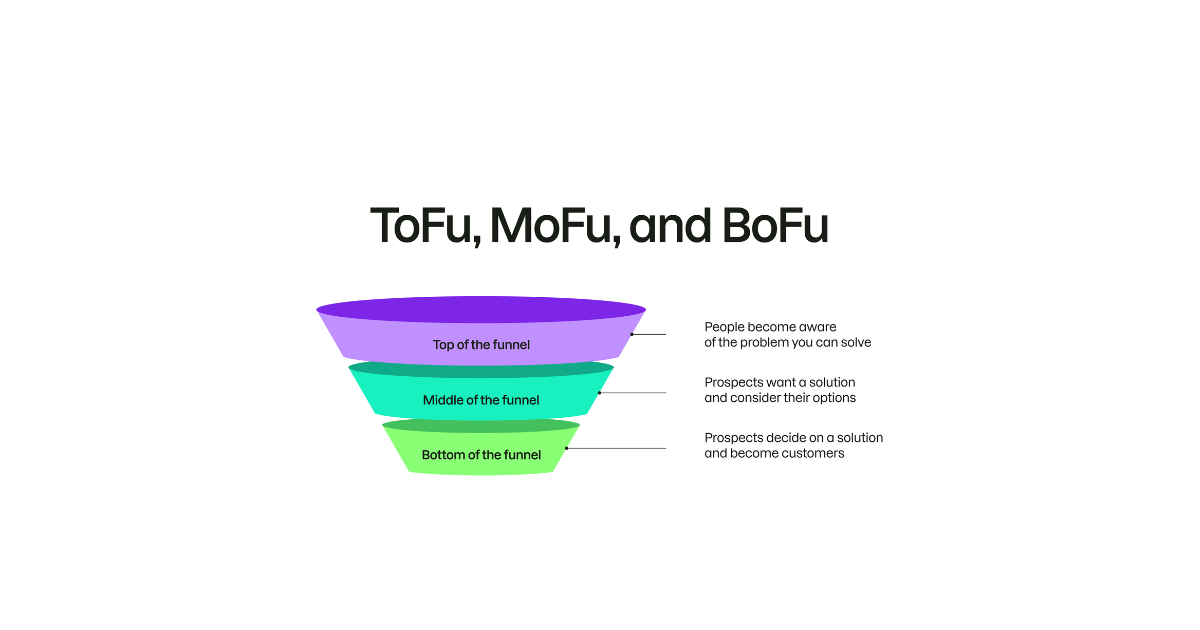
A marketing funnel is a model of how strangers become customers. It is wide at the top (many people just discovering you), narrower in the middle (some are interested), and narrowest at the bottom (a few actually buy). The shape exists because not everyone who hears about you will purchase and that is normal.
Think of the funnel less as a diagram and more as a decision-making tool. When you know which stage you are losing people at, you stop spending on random tactics and start fixing the one thing that will actually grow revenue. The original concept dates back to 1898, when American advertising pioneer Elias St. Elmo Lewis introduced the AIDA model Attention, Interest, Desire, Action. The labels have evolved, but the underlying logic still holds today.
Why Every SME Needs a Marketing Funnel
The reality is simple: large brands can afford messy marketing because they have the budget to absorb waste. SMEs cannot. Every dollar and every hour has to earn its place.
The Cost of "Random Acts of Marketing"
Most struggling SMEs are not doing too little they are doing too many disconnected things. A boosted post here, a flyer there, a half-built website, a dormant LinkedIn page. Each piece may be fine in isolation, but nothing connects, so nothing compounds. A funnel forces every activity to answer one question: which stage of the customer journey does this serve? If a tactic does not move someone from one stage to the next, it is a candidate to be cut.
How a Funnel Changes Your Decision-Making
Once you can see your funnel, planning becomes simple. You stop asking "what should we post this week?" and start asking "where is the biggest leak, and what is the cheapest way to plug it?" That shift is what separates SMEs that scale from SMEs that just stay busy. According to Salesforce, 78% of consumers will not buy from a brand they do not trust which means your funnel's job is not just to drive clicks, but to build credibility at every stage.
What Are the Stages of a Marketing Funnel?
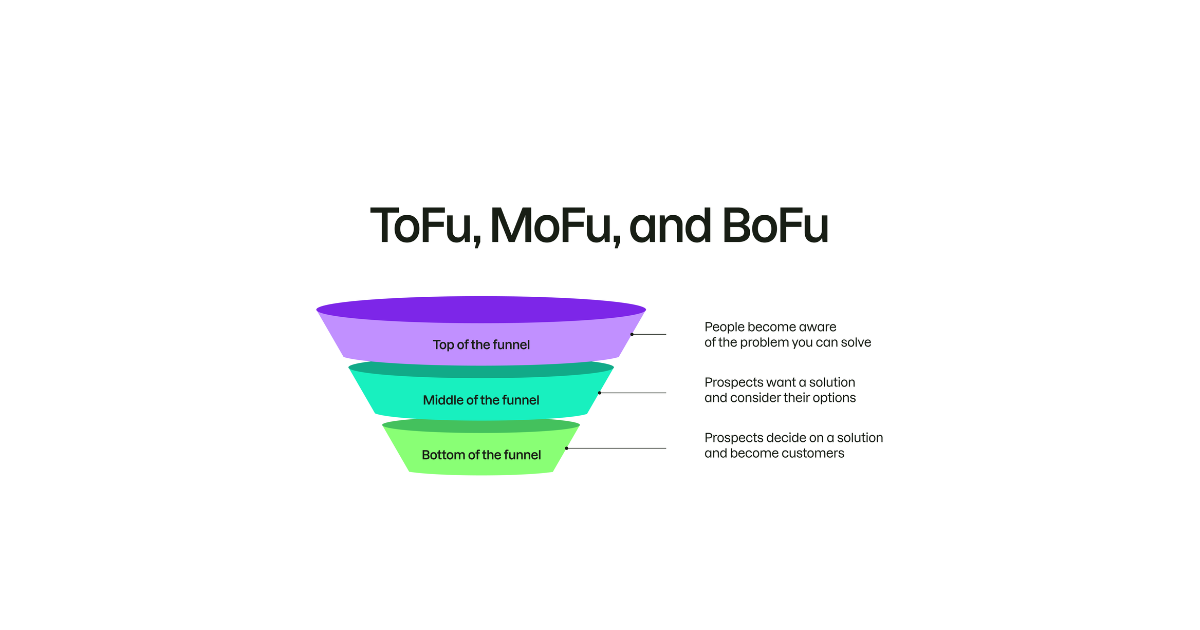
Modern marketers usually divide the funnel into three core layers, plus a critical post-purchase stage that most SMEs overlook.
The 4 Stages of a Marketing Funnel
- Awareness — Top of Funnel (TOFU)
- Consideration — Middle of Funnel (MOFU)
- Decision — Bottom of Funnel (BOFU)
- Retention & Advocacy — Post-Purchase
Top of Funnel (Awareness)
This is where strangers first meet you. The goal is not to sell — it is to be useful, interesting, or entertaining enough to earn a few seconds of attention. Common Top-of-Funnel (TOFU) channels include short-form video, SEO blogs, social posts, podcasts, PR, and paid awareness ads The mistake most SMEs make at TOFU is selling too early. If your first impression is a discount code, you have already commoditised your brand. Lead with value, not with price.
Middle of Funnel (Consideration)
Now the prospect knows you exist and is wondering whether you are worth their time. Middle-of-Funnel (MOFU) is where trust gets built through case studies, comparison guides, webinars, lead magnets, and email nurture. This is the stage SMEs neglect most, and it is almost always the biggest leak. According to Forrester, companies that excel at lead nurturing generate 50% more sales-ready leads at 33% lower cost.
Bottom of Funnel (Decision)
At the Bottom of Funnel (BOFU), the prospect is ready to buy they just need a reason to choose you. Reviews, testimonials, free trials, consultations, pricing pages, guarantees, and well-timed offers all live here. The BOFU question is not "are they interested?" It is "what is stopping them from saying yes today?"
Post-Purchase (Retention and Advocacy)
The funnel does not end at checkout. A happy customer is your cheapest source of more customers — through repeat purchases, referrals, reviews, and word of mouth. Onboarding emails, loyalty programs, referral incentives, and community building all belong here.
Per Invesp, acquiring a new customer costs 5 to 7 times more than retaining an existing one. For most SMEs, doubling retention is faster and cheaper than doubling acquisition.
Marketing Funnel vs Sales Funnel vs Flywheel: What's the Difference?
These three terms get used interchangeably, but they are not the same thing.
|
Model
|
What It Covers
|
Who Owns It
|
Best Used When
|
|
Marketing Funnel
|
Stranger → aware → interested → lead
|
Marketing team
|
You need to attract and qualify demand
|
|
Sales Funnel
|
Qualified lead → opportunity → closed deal
|
Sales team
|
You have a sales-led, higher-ticket offer
|
|
Flywheel (popularised by Brian Halligan at HubSpot)
|
Attract → Engage → Delight (continuous loop)
|
Whole company
|
You want retention and referrals to fuel growth
|
Other useful frameworks worth knowing: See-Think-Do-Care by Avinash Kaushik, Pirate Metrics (AARRR) by Dave McClure, and the RACE Framework from Smart Insights. For most SMEs the honest answer is that you need the marketing funnel, the sales funnel, and the flywheel working together marketing fills the top, sales closes the bottom, and the flywheel keeps customers coming back and bringing friends.
Want to Know Where Your Marketing Funnel Is Leaking?
How Do You Build a Marketing Funnel? (7-Step Guide for SMEs)
Here is the seven-step process I would walk through with any SME starting from scratch.
Step 1 — Define Your Ideal Customer and Core Offer
Before you build anything, get painfully specific about who you serve and what you sell them first. One avatar, one core offer. If you cannot describe your ideal customer in two sentences, your funnel will leak from day one.
Step 2 — Map the Buyer's Journey to Funnel Stages
Write down what your ideal customer is thinking, searching, and feeling at each stage — awareness, consideration, decision, retention. This becomes the blueprint for what content and offers go where.
Step 3 — Choose One Channel Per Stage
You do not need to be on every platform. Pick one strong TOFU channel (SEO blog or short-form video), one MOFU mechanism (email nurture), and one BOFU asset (a sales call or product page). Master those before adding more.
Step 4 — Create the Right Content for Each Stage
Match the content to the mindset. Awareness content educates and entertains. Consideration content compares and proves. Decision content removes friction and risk. The same blog post cannot do all three jobs well.
Step 5 — Set Up Tracking and Conversion Events
If you cannot measure it, you cannot fix it. Install Google Analytics 4, set up the Meta Pixel and Google Ads tag, and define conversion events for each funnel stage — page view, lead, qualified lead, customer, repeat customer.
Step 6 — Build the Follow-Up and Nurture Sequence
This is the highest-ROI step for most SMEs. A simple 5- to 7-email welcome sequence triggered when someone gives you their email can lift conversion by 20 to 50%. Add SMS or WhatsApp where appropriate for your market.
Step 7 — Measure, Find the Leak, Optimize
Once you have 30 to 60 days of data, look at stage-to-stage conversion rates. Find the worst-performing one. Fix only that. Repeat. This discipline is what compounds — and it's the single habit that separates SMEs that scale from SMEs that stall.
Marketing Funnel Examples for SMEs (3 Real-World Templates)
Theory is useful — but here is what a funnel actually looks like for three common SME types.
Example 1 — Local Service Business (Salon, Clinic, Studio)
A salon's TOFU is short-form video on Instagram and TikTok showing transformations, plus a strong Google Business Profile. MOFU is a free first-visit offer captured via DM or WhatsApp. BOFU is the booking confirmation and reminder flow. Retention is a post-visit thank-you, a 30-day rebooking reminder, and a referral incentive ("bring a friend, both get 20% off"). Simple, but it works.
Example 2 — B2B SaaS Startup
TOFU is SEO content and LinkedIn thought leadership from the founder. MOFU is a gated benchmark report or ROI calculator. BOFU is a 14-day free trial with an in-app onboarding sequence and a sales-assist call for high-value accounts. Retention is monthly product education emails, a customer success check-in, and an annual upsell campaign.
Example 3 — eCommerce / DTC Brand
TOFU is paid social (Meta and TikTok ads) plus influencer seeding. MOFU is an email and SMS list built via a 10–15% first-order discount popup. BOFU is the product page with reviews, UGC video, and an abandoned-cart sequence. Retention is a post-purchase flow, a loyalty program, and a winback campaign at day 60.
Best Marketing Funnel Tools for SMEs in 2026
A small focused stack beats a fifteen-tool Frankenstack every time. For most SMEs, the right stack is the smallest one that lets you run your funnel end-to-end without manual work.
|
Funnel Job
|
Recommended Tools (pick one)
|
|
CRM
|
HubSpot (free tier), Pipedrive, Zoho Bigin
|
|
Email and marketing automation
|
ActiveCampaign, Klaviyo (eCom), Mailchimp
|
|
Landing pages
|
Webflow, Leadpages, ClickFunnels, Unbounce
|
|
Ads
|
Meta Ads, Google Ads, LinkedIn Ads (B2B)
|
|
Analytics and tracking
|
Google Analytics 4, Meta Pixel, Hotjar
|
|
Booking and scheduling
|
Calendly, Cal.com, SimplyBook.me
|
|
Automation glue
|
Zapier, Make.com
|
|
SMS and WhatsApp
|
Twilio, Wati, Klaviyo SMS
|
If you are starting from zero, a workable starter stack is HubSpot Free (CRM + email) + Webflow or Leadpages (pages) + Meta Ads + Google Analytics 4. That's it. You can add later — start small.
7 Marketing Funnel Mistakes SMEs Make (and How to Fix Each)
- Over-investing in TOFU, ignoring MOFU. More traffic into a leaky bucket is not a strategy. Fix nurture before you scale ads.
- Selling at first touch. Pitching before building trust burns your audience. Lead with value.
- No follow-up system. If a lead has to chase you, you have lost them. Automate the first 7 days of contact.
- Treating every visitor the same. A first-time visitor and a returning lead need different messages. Segment.
- No conversion tracking. If you cannot see where people drop off, you are optimising in the dark.
- Ignoring retention. Acquiring a new customer costs roughly 5–7x more than keeping one. Build the back end of the funnel.
- Chasing every new platform. Master one channel per stage before you add another. Depth beats breadth.
A quick compliance note for UK and Canadian SMEs: lead capture and email/SMS nurture must respect GDPR (UK), CASL (Canada), and PIPEDA (Canada). In the US, CAN-SPAM sets the email rules. Get explicit consent, offer easy unsubscribe, and document your data practices it protects both your customers and your business.
Marketing Funnel KPIs and Metrics to Track at Each Stage
You do not need fifty metrics. You need the right one per stage.
|
Stage
|
Goal
|
Primary KPI
|
Healthy Benchmark (SME)
|
|
Awareness (TOFU)
|
Reach the right audience
|
Impressions, reach, organic traffic
|
CPM within industry range
|
|
Interest (TOFU→MOFU)
|
Earn engagement
|
CTR, watch time, time on page
|
CTR > 1% on ads, > 2% on email
|
|
Lead (MOFU)
|
Capture contact info
|
Lead conversion rate, Cost per Lead (CPL)
|
2–5% landing-page conversion
|
|
Qualified Lead (MOFU→BOFU)
|
Identify real buyers
|
MQL → SQL rate
|
20–30% of leads qualify
|
|
Customer (BOFU)
|
Close the sale
|
Conversion rate, Customer Acquisition Cost (CAC)
|
CAC < ⅓ of customer LTV
|
|
Retention
|
Keep customers buying
|
Repeat purchase rate, churn, NPS
|
20%+ repeat rate; NPS > 30
|
|
Advocacy
|
Generate referrals
|
Referral rate, review volume
|
10%+ of customers refer or review
|
Quick definitions for clarity: CAC = total marketing + sales spend ÷ new customers acquired. LTV = average revenue per customer × average customer lifespan. MQL = Marketing Qualified Lead. SQL = Sales Qualified Lead. NPS = Net Promoter Score.
Pick the one stage furthest below benchmark. That is your leak. Fix it. Then move to the next.
Frequently Asked Questions
What is a marketing funnel in simple terms?
A marketing funnel is the journey a person takes from first hearing about your business to becoming a paying and ideally repeat customer. It helps you visualise where prospects drop off across awareness, consideration, decision, and retention, so you can focus time and budget on the stage that needs it most.
What are the 4 main stages of a marketing funnel?
The four main stages are Awareness (top), Consideration (middle), Decision (bottom), and Retention/Advocacy (post-purchase). These are sometimes broken into sub-stages like Interest, Intent, and Evaluation in the AIDA or See-Think-Do-Care models, but the four-stage version is the most practical for SMEs.
What is the difference between a marketing funnel and a sales funnel?
The marketing funnel covers the entire journey from stranger to customer, while the sales funnel typically begins at the qualified-lead stage and tracks how those leads convert into closed deals. Marketing fills the funnel with qualified demand; sales closes it. In SMEs the two often blur into one process.Do small businesses really need a marketing funnel?
Yes — arguably more than enterprise brands. SMEs have less budget to waste, so a funnel forces clarity on which channel, message, and offer is producing real revenue rather than just activity. Without a funnel, most SME marketing becomes guesswork that drains cash without compounding results.
How long does it take to build a marketing funnel?
A minimum viable marketing funnel — one offer, one acquisition channel, and one email nurture sequence — can be live in 2 to 4 weeks. Expect 60 to 90 days before you have enough conversion data (typically 200+ leads) to make confident, stage-by-stage optimization decisions.
How much does it cost to build a marketing funnel?
For an SME, the tooling stack can be as low as USD $50–$200 per month using HubSpot Free, Mailchimp, and Webflow. The bigger investment is in content, ads, and skilled time. A realistic all-in monthly budget for a serious SME funnel typically starts around USD $1,500–$5,000.
What are the best tools for building a marketing funnel?
Common picks include HubSpot, ActiveCampaign, or Mailchimp for CRM and email; Webflow, Leadpages, or ClickFunnels for landing pages; Meta Ads and Google Ads for traffic; and Google Analytics 4 plus Hotjar for measurement. Choose the smallest stack that lets you run your funnel without manual work.
How do I know if my marketing funnel is working?
Track stage-to-stage conversion rates: visitor-to-lead, lead-to-qualified-lead, qualified-lead-to-customer, and customer-to-repeat. If any one rate is well below benchmark — for example, less than 2% landing-page conversion or less than 20% repeat-purchase rate — that is your leak and your next priority.
Final Thoughts: Your Funnel Is a Growth System, Not a Diagram
Most SMEs do not have a traffic problem. They have a system problem. A marketing funnel is not a pretty graphic for a deck — it is the operating system your marketing runs on. Once it is in place, every campaign, every dollar, and every hour starts pulling in the same direction.
Start small. Map your funnel on a single page. Track one KPI per stage. Find one leak. Fix it. Then do it again next month. That is how SMEs in the US, UK, and Canada quietly turn random marketing into reliable growth.

Comments
No comments yet. Be the first to share your thoughts!
Leave a Comment